Our olive oil is produced in the mountains surrounding the fishing village of Plakias, on the south coast of Crete — mainly in Sellia, a small village perched on a mountain ridge about 300 metres above the sea. Cretan olive trees have grown here for generations, producing olives known for their intense flavour and naturally low acidity.
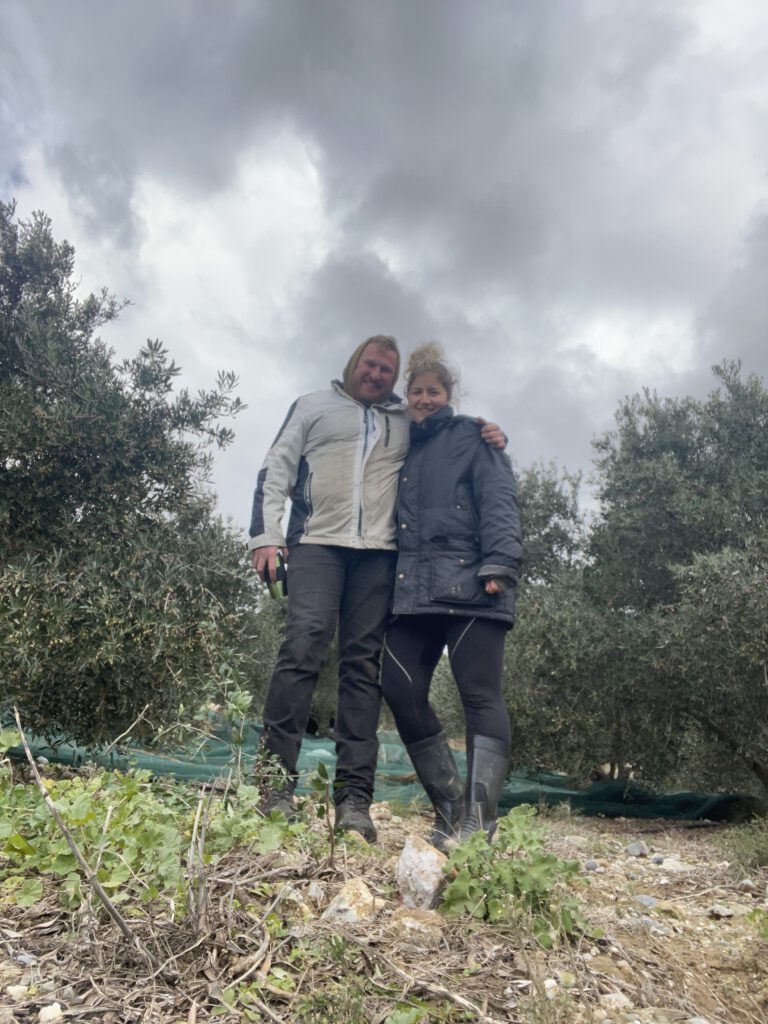
But how did it all begin? We are Manolis & Myrina. When we met in 2021, one thing quickly became clear: Myrina wanted to get involved in the olive harvest and learn everything about the process, from tree to oil. Manolis’ family has been tending and harvesting olive trees for generations — as have many families in this part of Crete — producing their own olive oil year after year.
From harvest to olive oil…
The tradition of the olive harvest has been passed down through families for generations. Many years ago, Manolis’ grandfather — also named Manolis — even ran an olive mill here in the village.
Back then, olive mills looked very different from the ones we know today. Heavy millstones were moved by hand and with the help of donkeys to crush the olives and extract the oil. From harvesting the fruit to producing the finished oil, almost everything was done manually — a slow, physically demanding process.
The harvest itself was no different. Entire families would head out to the groves and everyone had a job to do. Here in the mountains of South Crete, where many olive trees grow on steep slopes, that could mean seriously hard work.
Myrina’s father Manuel got a taste of it himself last November. And although we were working on relatively flat ground that day, after a few hours he could confirm: harvesting olives is still no easy job.
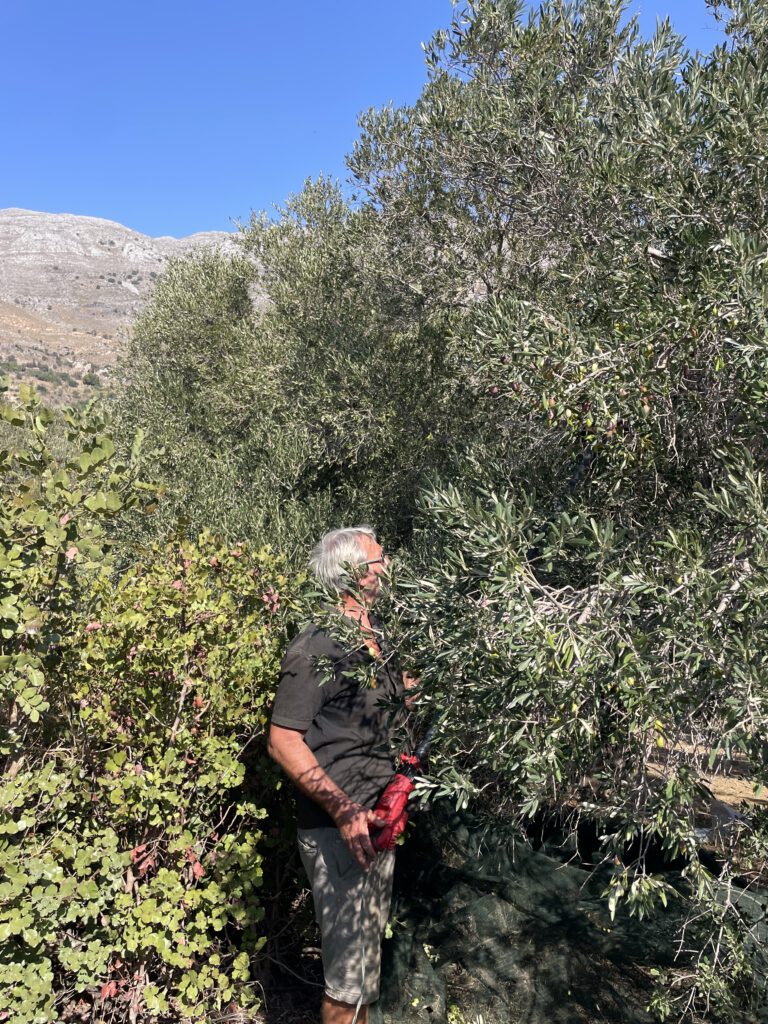
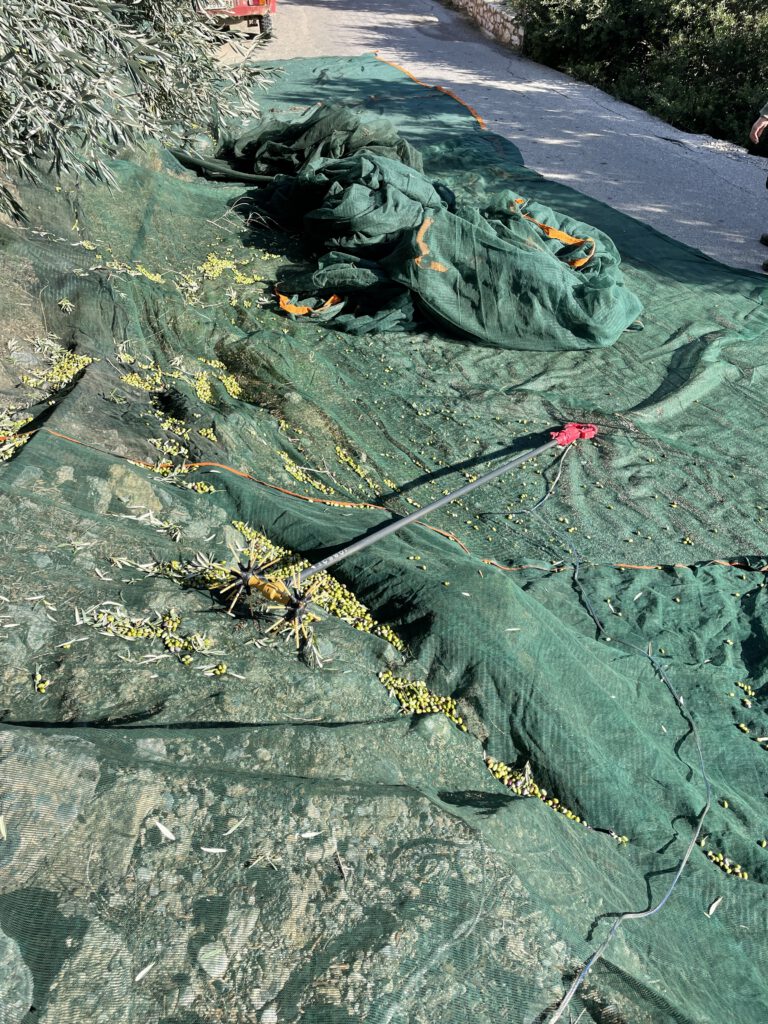
Today, modern equipment makes the process considerably more efficient. We use motorised harvesting sticks, powered by a generator, to gently shake the olives from the branches. Soft plastic fingers rotate rapidly through the tree, mimicking the work that was once done entirely by hand.
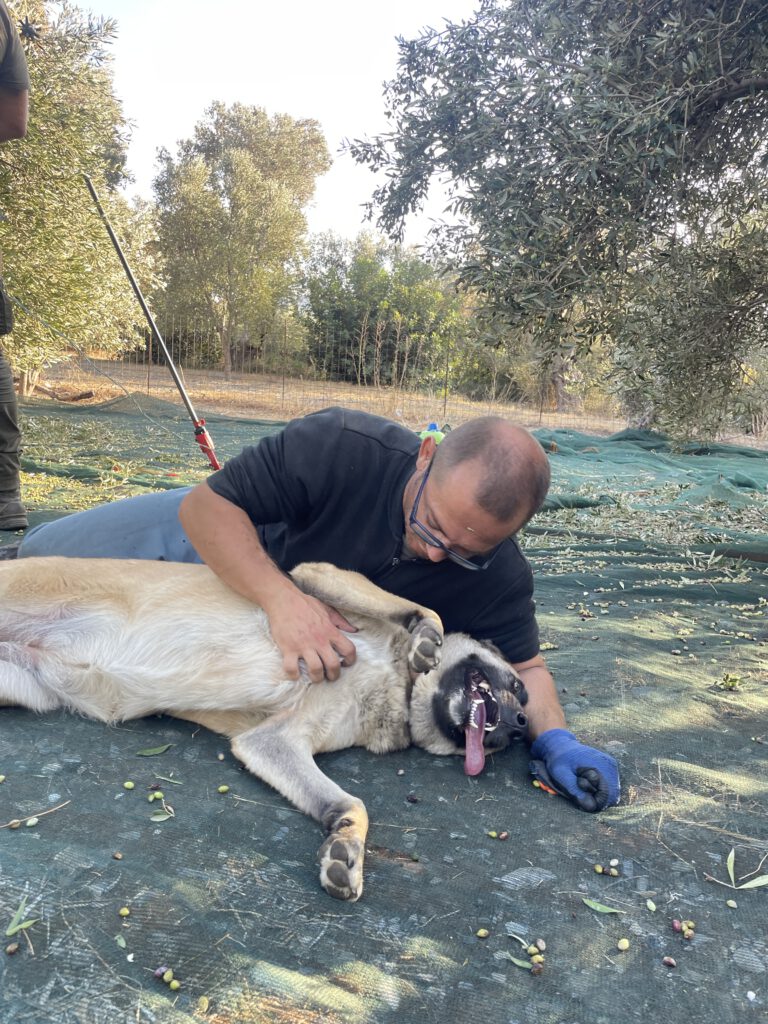
It may be faster, but it is still physical work. Each stick has to be carefully guided through the tree, branch by branch, allowing the olives to fall onto large nets spread across the ground below.
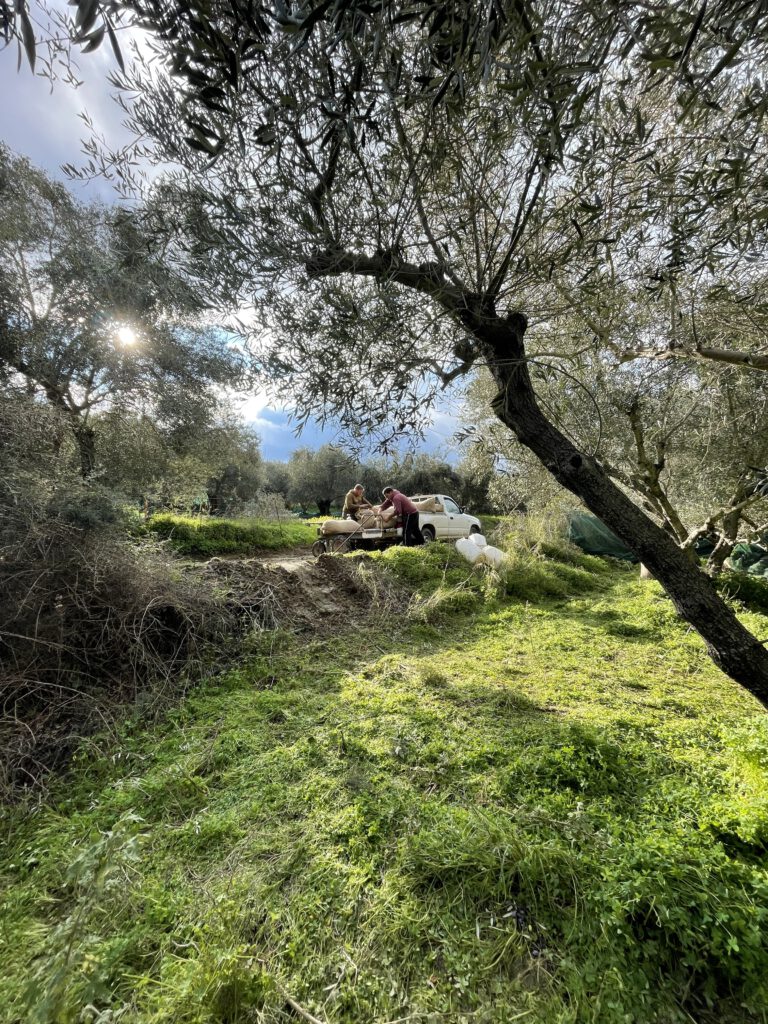
Some of these nets cover up to 80 square metres. Once a tree has been harvested, the nets — olives and all — are gathered together, bringing the fruit into one place. From there, it takes buckets, hands and plenty of sweat to fill the large jute sacks, removing as many leaves and branches as possible along the way.
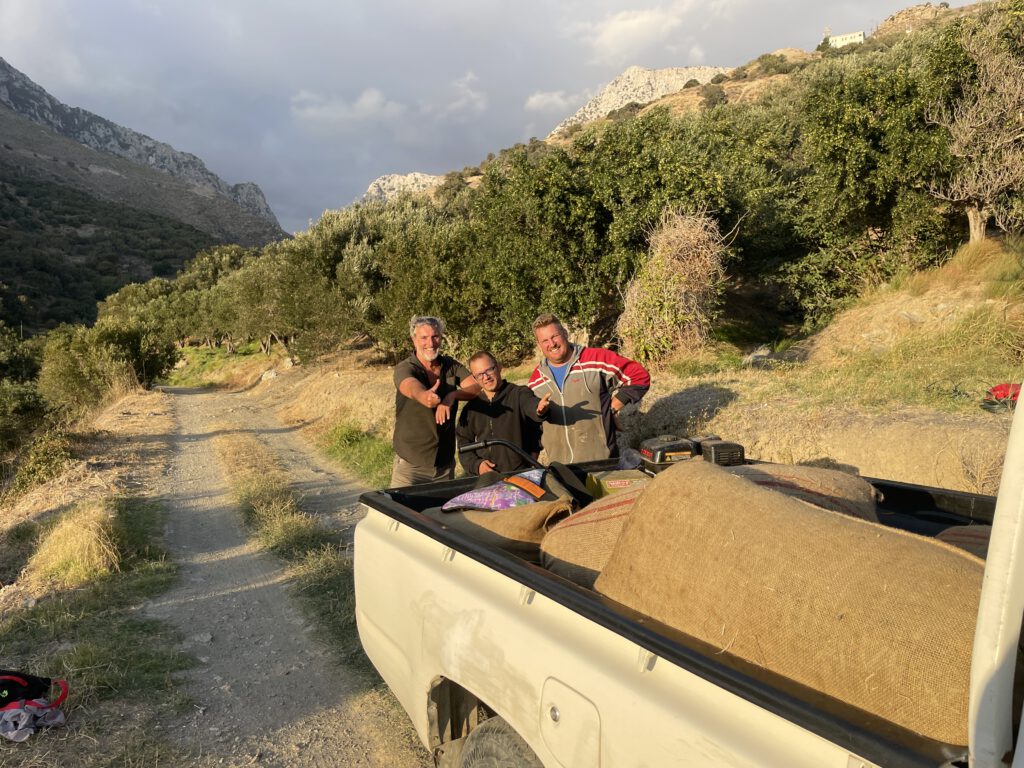
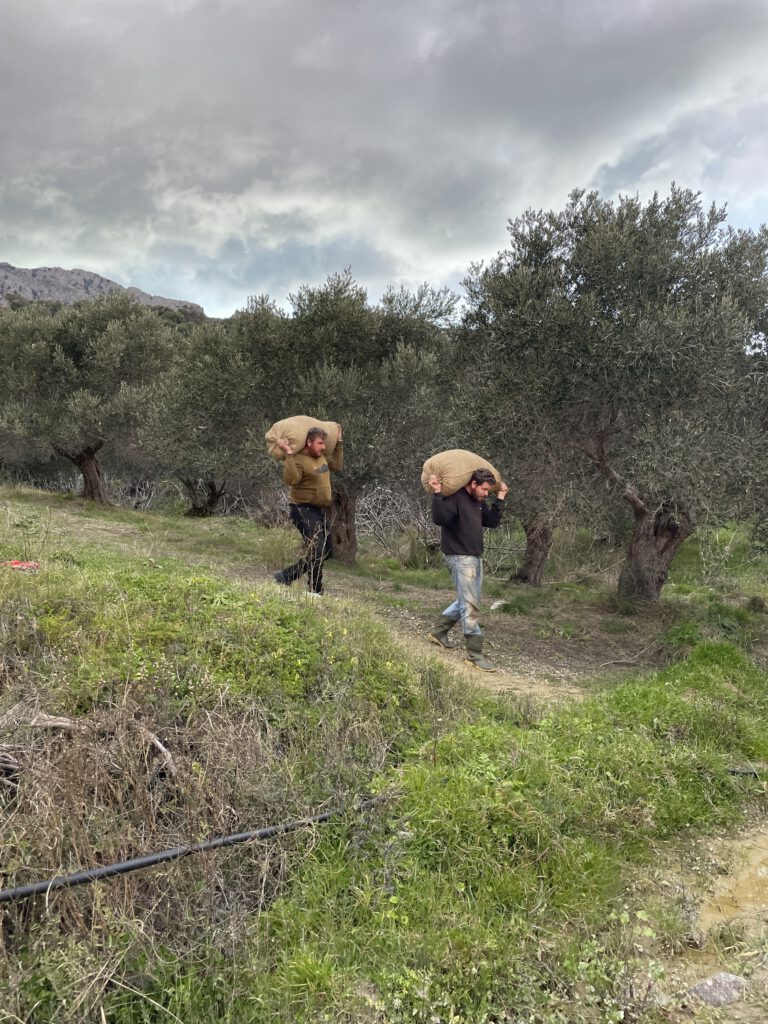
The 50-kilo sacks are carried to the car and, at the end of a long day in the groves, taken to the nearby olive mill. Our mill in Sellia is run as a local cooperative and transforms our freshly harvested olives into finished oil within hours: natural, unfiltered extra virgin olive oil with low acidity and a fresh, fruity, peppery flavour.
Why “natural” and not “organic”?
Quite simply: because we are not certified organic yet.
Transparency matters to us. Our olive trees are not sprayed with pesticides or treated with chemical herbicides. After the harvest, the groves are fertilised using high-quality organic fertiliser. Our trees are otherwise left to grow with relatively little intervention, shaped by the conditions that define this part of Crete: intense heat, strong winds and drought throughout the summer, followed by heavy rains and storms in winter.
We are currently in the process of obtaining organic certification.
Papadakis Finest
100% natural Cretan olive oil.
Our olive oil travels only a short distance from grove to mill, while its production supports our local cooperative. It is neither filtered nor stored away for years, helping it retain its fresh, fruity character and vivid colour.
Use it for cooking, pour it generously over a salad, dip good bread straight into it or simply add it wherever a dish needs a little more of the good stuff.